Showing posts with label braces st charles. Show all posts

Friday, April 8, 2022

The Types of Braces Your Orthodontist Uses Matters

Your smile has an effect on your whole life. At Kelly Orthodontics, we offer three types of braces to help transform your smile.

Victory Series Braces Low Profile Braces - Metal braces are the most common type of braces used in our practice because they are robust and remarkably effective. However, unlike earlier metal braces, the Victory SeriesLow Profile Braces System incorporates a low-profile approach that enhances both aesthetics and patient comfort. Since the brackets and tubes come with a pre-applied, light-sensitive adhesive that enables patients to have controlled, efficient bonding with less waste, trouble and time, the Victory Series is popular with our patients. The bonding pads curve to match the shape of your tooth to provide exact results. The brackets are also color-coded to help your Dr. Kelly quickly and effectively treat each tooth individually.

Clear Aligners - Invisalign is an orthodontic treatment that straightens teeth without the use of metal braces. Invisalign uses a series of custom-made clear trays that cover your teeth and gently push them into the proper position over time. Because they are clear and can be taken on and off, they are less noticeable than traditional braces. With Invisalign clear aligners there are no metal brackets or wires to detract from your smile while undergoing treatment. Invisalign clear aligners are made from BPA-free plastic, and they are often more comfortable than traditional silver braces. Clear aligners are used to close gaps between teeth, as well as treating overbites, underbites, open bites, crossbites, and overcrowded teeth. However, certain types of orthodontic problems still require braces on the teeth to be corrected. Children, teenagers, and adults can wear Invisalign.

Clarity Ceramic Braces - Ceramic braces work just like traditional silver braces, however, they are made of a tooth-colored ceramic material and are nearly invisible. Clarity Ceramic Braces offer the ultimate combination of aesthetics and performance to our patients. They are ultra-small translucent brackets, made of an innovative ceramic material for an attractive appearance. They are designed to blend with your natural tooth color and are resistant to staining and discoloration throughout treatment. Clarity Ceramic Braces also have dome-shaped design to aid in patient comfort.

At Kelly Orthodontics we are serious about getting the best possible result with the least amount of discomfort in the fastest time possible. Schedule your complimentary consultation today and smile with confidence tomorrow.

Tuesday, March 22, 2022

Orthodontic Treatment Options

A variety of orthodontic options exist today for people looking to correct their smile. From traditional metal braces to Invisalign aligners, it can be a challenge to decide which choice is the best. At Kelly Orthodontics, we know about all of the treatment options on the market, and which is the best option for your specific orthodontic problem.

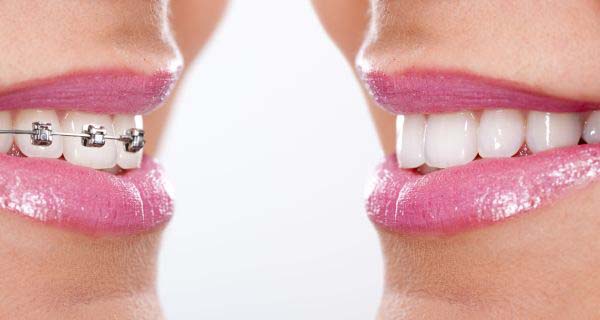
Metal Braces - Metal braces are the most common type of braces because they are robust and very effective. Metal braces are made of sleek surgical steel and titanium and are comfortable to wear. Metal braces are bonded to the teeth and connected with a metal archwire brought into place with tiny elastic bands. Metal braces require periodic tightening every 4 to 6 weeks. The steady pressure will gradually straighten your teeth and align your jaw over time. Metal braces can correct a wide variety of issues, including jaw problems,crooked teeth, and bite misalignments. Silver braces are a proven method for getting a lifelong, healthy bite.

Ceramic Braces - Clear ceramic braces are a popular choice for teens who want to make a lasting impression and adults who want to make a less noticeable statement during treatment. Ceramic Braces work like metal braces only better, because they blend in with your natural tooth color for a great look. Ceramic Braces are similar to Silver braces in their application, duration of treatment, and removal and are used to correct the same dental issues as metal braces and invisible aligners. Since ceramic braces are designed to blend seamlessly into your smile, Dr. Kelly will select the perfect shade to match your natural tooth color. For those with naturally whiter teeth, a clear ceramic is used to render the brackets almost invisible. Those with darker tooth shades have the option to select colored ceramic matched to their teeth for best aesthetic results. The metal archwire is similarly colored to complement your teeth, and the elastic bands are typically clear.

Clear Aligners - Unlike silver and ceramic braces, clear aligners, like Invisalign, use clear trays to help you achieve a straight smile. The clear aligner trays are removable, which means that when you need to take them out, you can. It also means that you can continue to take care of your teeth normally, and continue to eat the wonderful foods you love. Typically, clear aligners work faster than traditional braces, meaning that you can effectively straighten your teeth faster. Each set of aligner trays are designed to fit your mouth and your teeth comfortably. Clear aligners have no metal to cause mouth abrasions during treatment.

Which orthodontic treatment option is best for you?

Dr. Kelly uses of the full range of orthodontic appliances to get you a great outcome in the shortest possible amount of time. Based on his specialty education in orthodontics, Dr. Kelly will recommend the treatment option he believes is the best fit for you and your lifestyle.

 
Book an initial consultation with Kelly Orthodontics to talk about your options regarding orthodontic treatment. We look forward to speaking with you soon!


Monday, February 7, 2022

Benefits of Early Treatment

Together with the American Association of Orthodontists, Dr. Dan Kelly recommends that your child’s first check-up with Kelly Orthodontics be performed no later than age 7. By age 7, your child has enough permanent teeth for Dr. Kelly to evaluate the developing teeth and the jaws to spot potential problems.

There are generally three outcomes from this first check-up:

  1. No treatment is expected to be necessary. 
  2. Treatment may be needed in the future, so your child will be monitored by Dr. Kelly periodically while the face and jaws continue to grow. 
  3. There is a problem that lends itself to early treatment.

While there are many orthodontic problems that Dr. Kelly agrees are best treated after all permanent teeth have come in, early treatment can be in your child’s best interests. The goal of early treatment is to intercept developing problems, eliminate the cause, guide the growth of facial and jaw bones, and provide adequate space for incoming permanent teeth.

Orthodontic Issues that Dr. Kelly May Recommend Treating Early Include:

  • Crossbites – Usually the result of a narrow upper jaw or abnormally wide lower jaw. A narrow upper jaw will often force a child to move their lower jaw forward or to the side when closing into a stable bite. When closed into this accommodating position, the lower teeth are located outside the upper teeth.
  • Crowding - Crowding of the teeth is one of the most common orthodontic problems. Crowded teeth typically stem from a discrepancy between space in the jaw and the size of the teeth. Crowding can be the cause of, or the result of other problems such as impacted teeth, retained primary teeth, or teeth that do not naturally fall out.
  • Spacing - Spaces between teeth is another common problem associated with the need for orthodontic care. Like crowding, spacing may be related to a tooth-to-jaw size disharmony. Tooth size discrepancies, such as smaller teeth or abnormally shaped teeth, can also create abnormal spaces between the teeth.
  • Openbite - An anterior open-bite is the lack of vertical overlap of the front teeth and can usually be traced to jaw disharmony or habits such as thumb sucking or the thrusting of the tongue against the front teeth.

Early orthodontic treatment can take many forms. But…regardless of how treatment goals are reached, the bottom line is that some orthodontic problems may be easier to correct if they are found and treated early. Waiting until all the permanent teeth have come in, or until facial growth is complete, may make correction of some problems more difficult.

To give your child the best opportunity for a healthy, beautiful smile, visit Kelly Orthodontics. No referral needed! Dr. Kelly will provide an initial consultation at no cost and with no obligation. He will alert you to potential problems and recommend treatment when it is most appropriate for your child.

For additional information, visit our website. Then, give our St. Charles office a call to schedule your child’s initial consultation.


Monday, December 20, 2021

Handle Your Retainer with Care

Like most patients at Kelly Orthodontics, you are probably counting down the days until you get your braces off. It’s no question that when that day comes, it will be exciting. But…it is important to remember that just because your braces have been removed, that doesn’t mean your orthodontic treatment is over.

Retainers will need to be worn following the removal of your braces to prevent the teeth from shifting. It is vital to follow Dr. Kelly’s instructions carefully after you have had your orthodontic treatment completed to ensure long-standing results.

Unfortunately, braces do not guarantee that your orthodontic treatment results will be permanent. In fact, teeth have a natural tendency to move back into their original place after the forces holding them have been removed. Without a retainer, it is likely that the teeth will go back to their prior misalignment shortly after having your braces removed. A retainer helps to keep your teeth aligned until they have set firmly into place.

Retainer use will continue indefinitely. The amount of time that you must spend wearing your retainer will depend on how long it has been since you had your braces removed. In most situations, you will be required to wear your retainer as often as possible for the first 3 to 6 months after your braces have been removed. After this, it is recommended that you wear your retainer nightly for the next 1 to 3 years. Failing to wear your retainer for a day or two won’t cause significant issues but failing to wear your retainer for extended periods of time will cause your teeth to move out of alignment.

There two main types of retainers and our team will discuss the best solution for retaining the alignment of your teeth with you.

Removable Retainers – These are retainers that you can remove and store when they are not in your mouth. This kind of retainer is often much easier to keep clean, because you can remove your retainer whenever you eat or brush your teeth. Removable retainers allow you to be more efficient with your oral hygiene routine. However, the main drawback to removable retainers is that you must remember to wear it according to Dr. Kelly’s specifications. Removable retainers are also easier to lose and damage, because they can be taken out of your mouth and misplaced.

Fixed Retainers - A fixed retainer is adhered to the teeth in much the same way as your braces. Fixed retainers consist of a thin wire that is positioned and bonded to the back surface of your teeth. Fixed retainers effective at keeping the teeth in place, but they can be more difficult to keep clean.

It is important to keep your retainer clean and in good condition. Remember to rinse your removable retainer in cold water before and after use. If you have a fixed retainer, you will need to follow the same processes to clean it as you did with braces. Store your removable retainer in a plastic case whenever it is not in your mouth. You will also need to wash your retainer with a specialized cleaner every few months.

At Kelly Orthodontics, we are passionate about your smile. To learn more about how to keep your smile straight and beautiful, visit our website or give one of our friendly and knowledgeable team members a call.


Monday, November 22, 2021

Are You Suffering From a TMJ Disorder?

As a Certified Specialist in Orthodontics, Dr. Dan Kelly doesn’t just make amazing looking smiles, he also deals with the bite as a whole…including the jaw. If you touch your face right in front of your ear while opening and closing your jaw, you will feel your temporomandibular joint at work. When your temporomandibular joint working as it should, you can yawn or take a big bite of your favorite food without thinking twice. When your temporomandibular joint is off, yawning and opening your mouth wide can cause serious pain.

The temporomandibular joint (TMJ) is a joint that connects the lower jaw to the temporal bone on either side of the face. The temporomandibular joint is capable of both hinge and sliding motions, allowing us to shift the jaw side to side and forward and back to do things like chew, yawn, and talk.

While people often refer to problems with the joint as TMJ, that is the name for the joint itself and TMJ pain is actually a TMJ disorder and part of a larger category of temporomandibular disorders (TMD). TMD involves the temporomandibular joint or its associated structures, such as the discs, muscles, cartilage, and ligaments.

The most common TMD symptoms include:

  • Popping, clicking, or a grating sensation when you open and close your mouth 
  • Pain and tenderness in the jaw, face, neck, or shoulders 
  • A decrease in jaw mobility leading to trouble opening the mouth fully 
  • Muscle spasms around the jaw 
  • Frequent headaches, earaches, pressure, and pain behind the eyes

If TMD is left untreated, it can lead to inflammation, swelling, or chronic pain. It can also contribute to progressive dental problems, such as premature tooth wear and periodontal disease.

Treatment of TMJ disorders depends on the cause. Custom nightguards or oral splints can be an excellent way to get relief without medication. If TMD is due to malocclusion or an imbalance in bite forces, braces or Invisalign can align the teeth and jaws, which repositions the TMJ and surrounding structures.

There are other issues that can cause the symptoms most experienced with TMD, such as tooth decay, gum disease, and even medical conditions like arthritis. That’s why it’s important to receive a proper diagnosis and the appropriate treatment from experienced orthodontist like Dr. Kelly. If you’ve been experiencing any of the symptoms associated with TMD, give Kelly Orthodontics a call. 


Thursday, October 28, 2021

Handling Orthodontics Issues at Home

Even though you are careful, you may occasionally damage your braces or orthodontic appliance. While there are steps you can take to temporarily fix or alleviate discomfort and prevent additional damage, you should always notify our office if you have any issues or concerns. 

At Kelly Orthodontics, we want our patients to be informed of problems that may occur, and understand how to solve them, at least temporarily, until it is possible to return to our office. With the tools and supplies listed below, you will be prepared to handle the most common orthodontic issues at home.

  • Orthodontic Wax
  • Dental Floss 
  • Tweezers
  • Q-tips 
  • Salt 
  • Interproximal Brush 
  • Toothpicks 
  • Non-prescription Pain Reliever  
  • Topical Anesthetic (such as Orabase or Ora-Gel)

Below are some typical orthodontic issues and how you can solve them:

Discomfort - It’s normal to have some initial discomfort during orthodontic treatment as your teeth move. Rinsing your mouth with warm salt water and over-the-counter pain relievers, such as acetaminophen or ibuprofen, may alleviate this discomfort.  If the discomfort lasts longer than a couple days, be sure to call our office.

If food becomes stuck between your teeth, use dental floss or a proxy brush to dislodge the food. If you cut your gums, tongue or the inside of your cheek, apply finger pressure to the bleeding site for several minutes. If the bleeding doesn’t stop, call your family dentist or our office.

Minor irritations and canker sores will heal more quickly if you apply Zylactin or Orabase according to the manufacturer's directions. You can purchase it over the counter at most pharmacies and convenient stores.

Loose or Poking Archwires - If a wire causes irritation, push the wire away from the area using the eraser end of a pencil or a Q-tip. If the wire cannot be tucked away, cover the end of the wire with a small piece of wax or a cotton ball until you can see us for an adjustment.

If the main wire has come out of the tube on the back tooth, attempt to reinsert the wire with a pair of needle-nose pliers or tweezers. If the wire is sticking you, place a piece of wax over the area. As a last resort, if you cannot come into our office, the wire can be cut with a small wire cutter or fingernail clippers close to the back of the last brace.

Loose Brackets or Bands - If a bracket becomes loose, it usually remains connected to the main wire by a little colored rubber ring or a small steel ligature tie. Tweezers can be used to reposition the brace if it flips around the wire and becomes a source of irritation. Call our office and inform us of the problem. If a piece of your braces break, save the piece and call our office to schedule a repair visit.

There will be normal, day-to-day discomfort associated with wearing braces, if you have any questions about your orthodontic treatment, or if you think you may have a true orthodontic emergency, don’t hesitate to call our St. Charles orthodontic office…We are here help!

Friday, August 27, 2021

10 Tips to a Healthy Smile

Your smile is one of the first things that people notice about you and for many people, an ideal smile is a mouth full of pearly white, perfectly aligned teeth. It’s not a bad goal to have, but in addition to straight white teeth, you need to make sure that your smile is a healthy one.

1. Brush your Teeth Twice a Day

Brushing removes leftover food particles that can bond with saliva to form plaque. These particles feed the bacteria that naturally live in our mouths and these bacteria can eat through our tooth enamel and cause tooth decay. When brushing your teeth, be sure to use a quality electric toothbrush or a soft bristled manual brush. While medium and hard bristled toothbrushes are readily available, stiffer bristles and aggressive brushing causes gums to recede and can wear down your tooth’s enamel.

2. Use Fluoride Toothpaste

Fluoride helps strengthen tooth enamel, making it an important additive to toothpaste. Using toothpaste and mouthwash with fluoride can reverse tooth decay at early stages, reducing the need for fillings.

3. Keep your Tongue Clean

When you brush your teeth, don’t forget to brush your tongue. Running your toothbrush over the white or yellow area at the back of your tongue helps to remove the foul-smelling bacterial waste that causes bad breath.

4. Take Good Care of your Toothbrush

Your toothbrush doesn’t need any special cleaning, but make sure it dries completely after each use and there is no leftover toothpaste. Store your toothbrush in an upright position that is exposed to air. Don’t forget to change out your old toothbrush for a fresh new toothbrush every 3 to 4 months…or earlier if you see a lot of wear and tear on the bristles.

5. Floss Daily

Flossing is important because it removes plaque between teeth and out from under the gumlines, where a toothbrush can’t reach. If left alone, plaque and tartar build up under the surface of the gumlines can cause periodontal disease, which leads to bone destruction and tooth loss. Daily flossing helps prevent tooth decay and gingivitis.

6. Limit Sugary Drinks

The bacteria in our mouths thrive on sugar which makes sugary drinks a major contributor to tooth decay. Reducing the amount of sugar in your diet combined with regular brushing and flossing can help keep the bacteria under control.

7. Maintain a Healthy Diet

A healthy diet is not only important for your overall health, but it is important for your teeth as well. In addition to good nutrition provided by healthy foods that help your bones and teeth grow and stay healthy, a lot of fruits and vegetables are crunchy and chewy, which promotes the production of saliva. Foods that require a lot of chewing are good for the teeth because more saliva means the mouth is naturally washed out more often.

8. Drink Plenty of Water

Water is the healthiest drink for your smile and your body. Drinking water helps rinse teeth clean and discourages tooth decay. Not only that…but keeping your body hydrated helps your mouth produce enough saliva to keep your mouth and teeth clean. Saliva naturally washes out the mouth, removing oral bacteria and the food particles that they feed upon.

9. Don’t Chew on Hard Items

Don’t chew on hard candies or ice and keep non-food items like pens, pencils, and water bottle caps out of your mouth. These items aren’t designed to be chewed and can damage your teeth.

10. See your regular Dentist Twice a Year

Regular dental visits are necessary to preserving your oral health. Having routine cleanings every six months helps to promote good oral health and a beautiful smile. Your dentist is trained to recognize early signs of tooth decay and gum disease before they cause severe damage to your teeth and mouth. Regular checkups are the key to maintaining a healthy smile. Visiting your dentist twice a year can help you avoid complicated and expensive dental procedures later in life.

It can take some time before you start to notice changes from improved oral hygiene. While these changes won’t come overnight, they are certainly worth the time and effort, both for the sake of your smile and your overall health. If you have any questions regarding the health of your teeth and mouth, don’t hesitate to call our office.


Tuesday, August 10, 2021

Put your Smile in the Hands of a Professional

If you have been considering orthodontic treatment for yourself or a member of your family, there has never been a better time to explore everything Kelly Orthodontics has to offer!

Although many people believe dentists and orthodontists are interchangeable, there are many significant differences that set them apart. It’s important to understand these differences in order to make an informed decision about your orthodontic care.

Dentists and orthodontists are on a similar path until they complete dental school. Following graduation, orthodontists will enter a residency program. These programs last 2-3 years and include specialized education and training focused on diagnosing and correcting a wide range of orthodontic issues. While all dentists do receive some basic orthodontic training at school, general dentists don’t possess this same level of training and experience when it comes to straightening smiles.

As the patient, it’s up to you to choose a care provider that you feel most comfortable with.  But when it comes to the way your teeth look, we think it makes sense to consider an orthodontist who has the education, training, and experience to give you the confident smile you deserve. 

At Kelly Orthodontics, we focus is providing high-quality orthodontic care and superior results. Our office uses the latest in orthodontic techniques and technology, so that we can provide our patients with the best results in the least amount of time possible.

Our practice is proud to provide families throughout St. Charles and the surrounding areas with exceptional orthodontic care. As a highly trained and skilled orthodontist, Dr. Kelly has spent years creating beautiful smiles for patients of all ages. Once you see what we have to offer, we think you’ll agree that you should trust your family’s smiles to an expert orthodontist!

If you would like to learn more about how Kelly Orthodontics can transform your smile, visit our website to schedule your initial consultation. Dr. Kelly will perform an extensive exam and will outline a personalized treatment plan thatis specific to your individual needs and goals.

Your family deserves a lifetime of healthy smiles, so get in touch with Kelly Orthodontics today!

Monday, June 21, 2021

The Perfect Age For Braces

When we think of braces, most of us think of teenagers. But nowadays, people of all ages are getting braces. So…what is the perfect age to start braces treatment?

Dr. Kelly can successfully correct most orthodontic problems regardless of the patient’s age. But that doesn’t mean that the orthodontic treatment starting age does not matter. In fact, the starting age may play a significant role in the total time and expenses required for the completion of the orthodontic treatment.

Traditionally, orthodontic treatment begins when a child has lost most of his or her baby teeth, and a majority of the permanent teeth have grown in. That said, it is a good idea to get an orthodontic evaluation by the time a child is 7 years old. You may think that 7 years old is too early to put your child in braces, however, this interceptive approach can help Dr. Kelly spot potential orthodontic problems related to jaw growth and eruption of adult teeth before they get out of hand.

Most orthodontic problems are ideally treated during a child’s teenage years. Usually, all or most permanent teeth are present and patients are at one of their most active phases of growth. This is a great time to correct most problems, as the jaws are actively growing and their growth can be most easily modified during this time.

Although childhood is a good time to make changes to the mouth and jaw, more and more adults are seeking orthodontic treatment for missing or crooked teeth, TMJ, and more. As an adult, you might think that your options for having your teeth fixed are limited, but today's orthodontic treatment options offer a variety of braces and appliances that are comfortable, aesthetic, and customized to meet your needs.

There really is no perfect age at which you should first visit the orthodontist. The best choice for you will largely depend on the severity of your orthodontic problem. A visit to Kelly Orthodontics should happen when you feel it is needed. Often, your family dentist will be the one to recommend the visit.

If you are considering braces for yourself or your child, give Kelly Orthodontics a call and schedule your initial consultation. Our friendly and knowledgeable team will take the time to address your concerns, answer your questions, and guide you through the treatment process.

Monday, March 22, 2021

Facts About Braces

At Kelly Orthodontics, we often get asked a lot of great questions about orthodontic care and treatment. We have also seen a lot of false information on orthodontic treatment. Some are rumors and others are myths that are believed to be fact.

Myth: “Braces and orthodontic treatment are only for children.”

Fact: Braces are not just for kids… orthodontics can be rewarding to adults as well. Teeth provide the support structure for the soft tissue of the lower face, including lips, and cheeks. By repositioning the teeth and jaw, skin can appear tighter, and lips can appear fuller. Adults can often achieve greater facial aesthetics without surgery or the extraction of teeth with a treatment plan utilizing an appliance that can expand the jaw and reposition teeth and gums.

Myth: “I can’t play sports anymore because I have braces.”

Fact: Having braces, does not mean you have to stop living your life! Whether you just received braces or are near the end of your treatment, braces should not be a barrier to playing any type of sport. If you wear a mouth guard, braces should not stop you from playing your favorite sport. If you are unsure which type of mouth guard to use or need more information on mouth guards, ask our staff.

Myth: “My dentist says he can give me braces or Invisalign.”

Fact: Both an orthodontist and a dentist are health care professionals that work on teeth. Both health care professionals help patients achieve good oral health and both are dental school graduates. All Orthodontists are dentists, but only a small percentage of dentists are orthodontists. Orthodontists must successfully complete an additional two to three-year residency program of advanced dental education in orthodontics. Orthodontists specialize in the alignment of teeth and services include treating misaligned teeth, crowded teeth, overbites, and under bites. Only an orthodontist who has been trained and certified by Align Technology can diagnose and treat using Invisalign.

A new smile means a new life change. At Kelly Orthodontics, we understand that a big decision like this is not easy. We will ensure that we answer all questions and make you feel comfortable. If you have any addition questions or concerns, please do not hesitate to ask us before coming to your first visit.

Tuesday, January 26, 2021

Does Your Breath Stink?

We understand that bad breath can be an uncomfortable subject to talk about but unfortunately it happens to most people for several different reasons. Bad breath, or halitosis, can be caused by poor oral hygiene, personal habits such as smoking or eating certain foods, or medical problems. The most common factor for bad breath in patients with braces at Kelly Orthodontics is almost certainly caused by poor oral hygiene.

After getting braces, patients may develop bad breath from not cleaning their teeth correctly. Bacteria feeds on food particles left in your mouth, and this bacterium creates odor. Because braces contain so many small spaces to trap food, the habits that worked great for cleaning your teeth before braces may no longer be enough. If you recently gotten braces and have found that you have developed bad breath, there is a good chance that it’s being caused by bacteria remaining in your mouth.

Six Steps for Better Breath When You Have Braces.

Step 1: Brush & Floss Often - Oral hygiene is extremely important, especially when you have braces. If you have bad breath even though you’re brushing twice a day, it may be time to increase the number of times you brush and floss to 3-5 times a day. Bring a toothbrush, toothpaste, and some dental floss with you to work and/or school so that you can keep your mouth feeling clean throughout your day.

Step 2: Stay Hydrated - Dehydration is bad for both your overall health and your oral health as it can increase the chances of bad breath greatly. Drink a lot of water every day to keep your mouth constantly clean and moist.

Step 3: Replace Your Toothbrush – Thousands of germs hide out on your toothbrush, and when you have braces, it’s important to keep those germs under control. Dr. Kelly and his team recommend that you replace your toothbrush once every three to four months. However, if you find that you feel sick, don’t have fresh breath, or the bristles on your toothbrush are frayed, you may want to replace your toothbrush more often.

Step 4: Use Anti-Bacterial Mouthwash - One excellent way to kill order causing bacteria is to use mouthwash. Not only does mouthwash get into the spaces between your braces, but it also kills germs and bacteria that remain in your mouth.

Step 5: Get a Water Pick – Water Picks are available at many different price points and from many different brands. Water picks are designed to clean the miniscule spaces between your teeth and gums.

Step 6: Breath Mints - If you have established a proper dental health routine but you still feel self-conscious about having bad breath, you can temporarily freshen your mouth with sugar-free breath mints.

Remember to schedule regular dental visits. Scheduling regular dental visits will help you keep any tooth and gum problems at bay as well as to rectify any oral health issues that may be contributing to bad breath or affecting your braces.

For more information on fighting bad breath visit our website or give one of our friendly team members a call...we are here to help.

Thursday, November 12, 2020

Why Go To An Orthodontist?

Kelly Orthodontics


A question people often ask is, “Can my dentist give me braces?” The simple answer is no. 

Your dentist may offer orthodontic services, leading you to assume that he or she is an orthodontist. But the truth is that putting aligners or braces on teeth does not make a dentist an orthodontist.

Dentistry is a broad medical specialty that deals with the teeth, gums, nerves, and jaw, while orthodontics is a specialty within dentistry that focuses on correcting bites. All orthodontists are dentists, but not all dentists are licensed orthodontists.

We know...it sounds a little confusing because both dentists and orthodontists work on teeth. They both provide professional care that helps patients have good oral health, and both are dental school graduates.But Dentists and Orthodontists are very different when it comes to the alignment of your teeth.

Orthodontists and dentists undertake the same training initially, but orthodontists complete further training after they graduate dental school to become qualified in the diagnosis, prevention and treatment of orthodontic problems. Orthodontists specialize in helping patients with the alignment of their teeth, improving their bite, and fitting them for braces and other corrective devices. The benefits of having an orthodontist work on your smile goes beyond just having a beautiful smile. Well-aligned teeth make it possible to bite, chew and speak effectively.

Not everyone needs to have orthodontic treatment, but it may be required if you have any of the following issues:

Overbites: Also known as an deepbite, an overbite is excessive vertical overlapping of the front teeth and is often found in association with a discrepancy between the length of the upper and lower jaws. It usually results in excessive eruption of the upper or lower incisors or both.

Crossbites: A posterior cross-bite will usually result from a narrow upper jaw or abnormally wide lower jaw. A narrow upper jaw will often force a patient to move their lower jaw forward or to the side, when closing into a stable bite. When closed into this accommodating position, the lower teeth are located outside the upper teeth. A posterior cross-bite can involve one side of the jaw, known as a unilateral cross-bite, or both sides of the jaw, known as a bilateral cross-bite.

Spacing issues: Spaces between teeth are another common problem associated with the need for orthodontic care. Like crowding, spacing may be related to a tooth-to-jaw size disharmony. Spacing may occur between the front and the back teeth. Tooth size discrepancies, such as smaller teeth or abnormally-shaped teeth, can also create abnormal spaces between the teeth.

Crowding: Crowding of the teeth is probably the most common orthodontic problem. This problem typically stems from a discrepancy between space of the jaw and the size of the teeth. Oftentimes, crowding can be just one of several orthodontic problems. Crowding can be the cause of, or the result of other problems such as impacted teeth, retained teeth or teeth that do not naturally fall out. Cross-bite of the front or rear teeth can also cause the teeth to become crowded.

Wondering if you should see an Orthodontist like Dr. Dan Kelly to improve your smile? Give Kelly Orthodontics a call today.


Technology That Enhances Your Orthodontic Experience

Kelly Orthodontics Technology has come a long way in orthodontics since the days of bulky brackets, goopy impressions, and embarrassing ap...